

I. Industry Market Background: Continuous Coil Polishing Becomes the Mainstream of Export Mass Production
With the upgrading of overseas orders for elevator decoration, kitchen and bathroom hardware, and high-end architectural decoration, traditional single-sheet polishing has low production capacity and poor texture consistency, making it unable to meet the demands of large-scale exports. Stainless steel coils, with their advantages of continuous mass production, high yield, and uniform surface texture, have become the mainstream raw material in high-end markets such as Europe, America, and the Middle East. Correspondingly, stainless steel coil polishing machines (coil to coil grinding polishing machines) have become the core automated main equipment in large and medium-sized deep processing plants. The coil-to-coil polishing line is an integrated intelligent production line that combines uncoiling, leveling, multi-stage precision grinding, cleaning and drying, and automatic rewinding. Its core advantages are full automation, replicable processes, no color difference between batches, and suitability for 24-hour continuous mass production, fundamentally solving the industry problem of inconsistent coil polishing quality.
Based on OUYIGANG’s 26-year factory data, overseas stainless steel coil polishing orders continued to climb from 2023 to 2026. The demand for high-end hairline brushed and mirror-finish precision coils increased significantly. The market’s requirements for equipment stability, polishing precision, automation and compliance have increased significantly. Ordinary assembly equipment with simple structure can no longer meet the high-end export mass production standards.
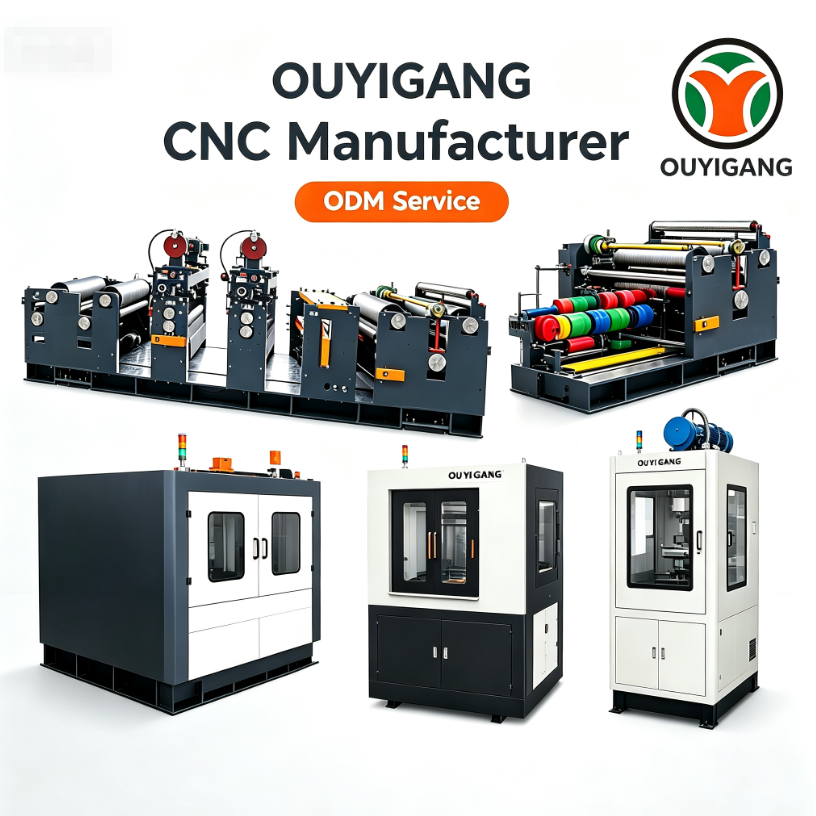
II. Common Misconceptions in Industry Procurement: Focusing Solely on Low Prices, Ignoring Process Adaptability and Self-Developed Capabilities
Currently, the coil polishing equipment procurement market is rife with two major misconceptions, which are also the core reasons why many factories suffer losses after production and fail to secure high-end foreign trade orders. These are conclusions drawn from OUYIGANG's years of overseas project testing.
The First Major Misconception: Comparing only the unit price of equipment while ignoring comprehensive production costs. Many processing plants prioritize low-priced, assembled coil polishing equipment. While the initial investment seems low, after production begins, rework rates are high, consumable waste is significant, downtime for debugging is frequent, and defective products accumulate. The hidden costs added over six months far exceed the price difference of the equipment. Many customers report that after one year of operation with low-priced equipment, the comprehensive depreciation costs are enough to buy a high-end, self-developed machine.
The Second Major Misconception: Failing to Distinguish Between "Assembled Machines" and "Self-Developed Modular Equipment." Many low-priced coil polishing machines on the market are assembled from general-purpose parts, lacking dedicated coil grinding algorithms, dynamic pressure compensation programs, and closed-loop control systems. They rely solely on simple mechanical grinding. These types of equipment are suitable for rough grinding of ordinary thick plates. However, when encountering thin plates, mirror polishing, or long-term continuous mass production conditions, structural defects will be directly exposed.
III.Detailed Working Conditions: Three Factory Scenarios Unsuitable for Low-End Assembly Polishing Production Lines
Based on OUYIGANG's global overseas implementation cases, there are three processing scenarios in 2026 that are absolutely unsuitable for using ordinary assembly-type stainless steel coil polishing machines. These are also the scenarios where high-end export factories encounter the most problems.
1. Ultra-thin Stainless Steel Coil Processing (0.3mm–1.2mm): Thin sheet coils have poor thermal stability and are stress-sensitive. Assembly machines lack dynamic cooling and zoned pressure adjustment structures, making high-speed continuous grinding prone to wavy deformation, edge collapse, and panel warping. European and American kitchen and bathroom/decorative thin sheet orders have zero tolerance for flatness, which low-end equipment simply cannot meet.
2. High-End Export Mirror-Finish Coil Customization: High-end European and American buildings, branded kitchens and bathrooms, and high-end elevator projects require stable Ra values, mirror-like transparency, no pinholes, no orange peel, and no hidden micro-scratches. Ordinary assembly machines lack sufficient grinding precision and have rudimentary filtration systems, failing to achieve a high-cleanliness mirror finish and failing third-party testing and customer factory audits.
3. 24/7 Continuous Mass Production Factory: Large-scale export factories require equipment to operate at high loads for extended periods. Assembly machines with loose structures, outdated programs, and lack of intelligent self-checking functions are prone to malfunctions, downtime, parameter errors, and uncontrolled textures during long-term mass production, leading to order delays and customer claims.
Overseas Case Study: In 2025, a large European stainless steel decorative materials factory initially purchased a general-purpose assembled roll polishing production line. After three months of operation, the defect rate reached 14.2%, making it unable to deliver high-end EU orders. After switching to OUYIGANG's self-developed modular coil to coil polishing production line, the yield rate stabilized at 99%, successfully securing a long-term annual framework order.
OUYIGANG's stainless steel coil polishing production line is a modular, fully automated, dry-wet dual-process compatible coil-to-coil precision polishing production line built upon 26 years of self-developed mass production experience in stainless steel surface treatment equipment.
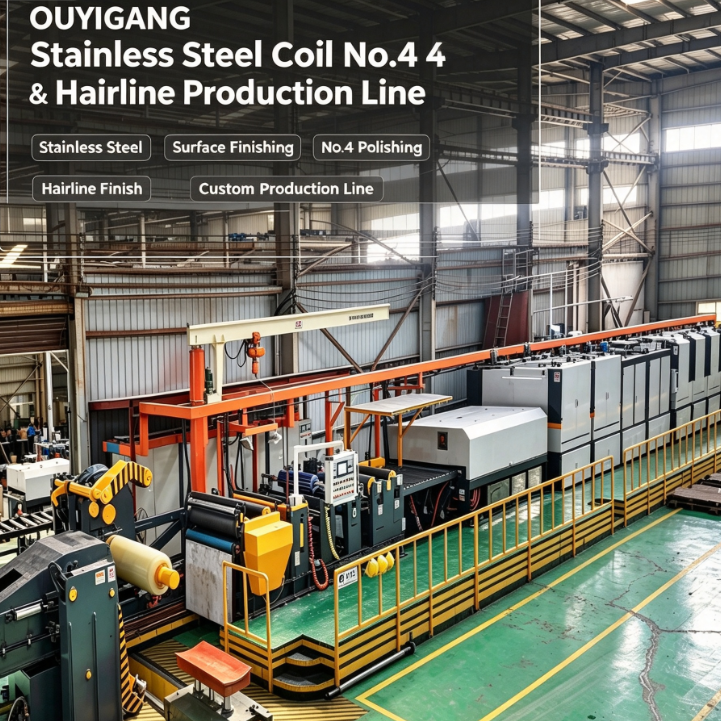
OUYIGANG's production workshop has a total of 5 stainless steel coil polishing production lines. The entire machine complies with EU CE machinery safety standards. The line integrates a fully closed-loop automated process of uncoiling, leveling, precision grinding, cleaning and drying, and automatic rewinding, supporting 24-hour uninterrupted and stable mass production. It can meet the large-scale production needs of dry, high-efficiency wire drawing for thick plates, and can also switch to wet precision polishing to complete high-precision processing of ultra-thin coils and high-end mirror-finish coils. The capacity reaches 15,000 tons per month. The minimum delivery quantity is 1 set.
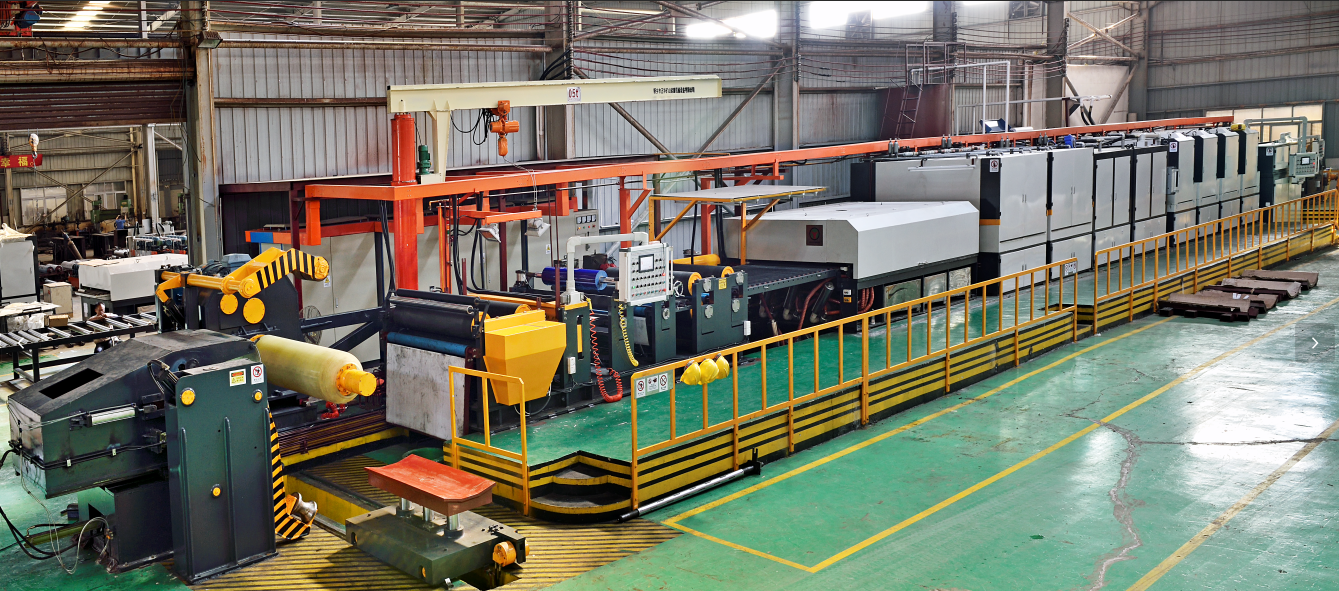
OUYIGANG Stainless Steel NO.4 and Hairline Coil Production Line
FAQ
Q1: Is a roll-to-roll polishing production line worth the investment compared to single-piece polishing equipment?
Based on OUYIGANG’s 26-year factory data, while the initial investment for a complete roll-to-roll polishing line is higher, it increases yield by 3%-5%, improves product quality by over 10%, and reduces labor costs by 60%. The price difference can be recovered within 6-10 months of mass production, and its long-term cost-effectiveness far surpasses that of traditional single-machine equipment.
Q2: What is the biggest difference between ordinary assembly machines and self-developed modular equipment?
The core difference lies in dynamic adjustment capability and mass production stability. Assembly machines operate with fixed parameters, and the quality deteriorates with production. Self-developed modular equipment can dynamically compensate for pressure, tension, and cooling parameters in real time, becoming more stable with increased production volume, and fully adapting to long-term export order delivery standards.
Q3: Is wet polishing a necessary process for thin sheet roll processing?
Not absolutely. There is no inherent superiority of wet or dry polishing processes; it depends on the specific needs. For high-end mirror finish orders on thin plates, wet polishing is prioritized to prevent deformation and burns. For mass production of conventional thick plates using wire drawing, dry polishing can be used, balancing efficiency and cost. Our self-developed equipment allows for flexible switching between these two modes.
Q4: Does the company provide process parameter guidance and sample testing when putting new equipment into production?
OUYIGANG provides free coil sample polishing testing, customized process parameters, and mass production solution matching for global customers. We also offer remote technical guidance and overseas on-site installation and training services to ensure rapid equipment deployment and compliance.