

This article delivers an objective, industry-oriented comparison of dry grinding and wet grinding for stainless steel sheets, clarifies their working principles, pros, cons and applicable scenarios, and explains why standardized modern factories prioritize wet grinding stainless steel sheet for high-standard mass production. You will also learn how a professionalstainless steel polishing machine optimizes wet grinding workflow to cut production costs and upgrade surface quality.
Ⅰ.What Is Dry Grinding for Stainless Steel Sheets?
Working Principle
Core Advantages of Dry Grinding
Low threshold: Requires simple grinding tools, no liquid circulation or sewage treatment supporting system, low early workshop layout cost
Clear operating vision: No water mist or liquid coverage on the grinding area, operators can check surface flaws in real time easily
Flexible for on-site work: Ideal for temporary on-site repair, small-piece partial touch-up and non-fixed processing scenarios
Critical Disadvantages (Factory Production Pain Points)
Severe thermal damage: Friction heat accumulates rapidly without cooling, leading to stainless steel sheet discoloration, edge warping and permanent thermal deformation; it will destroy the internal metal metallographic structure of high-grade 316L stainless steel
Short abrasive service life: Dry steel dust adheres and clogs sand belt gaps quickly, doubling abrasive consumption and raising long-term production cost
Heavy industrial dust hazard: Mass fine stainless steel dust pollutes the workshop, endangers operator respiratory health, and fails to meet modern workshop environmental protection standards
Uncontrollable surface quality: Hard friction leaves invisible micro-cracks and uneven grinding lines, making stablesurface roughness Ra wet grinding level impossible to achieve
Ⅱ. What Is Wet Grinding for Stainless Steel Sheets?
Working Principle
Key Advantages of Industrial Wet Grinding
Constant temperature processing, zero thermal damage: Circulating coolant takes away grinding friction heat instantly. The plate surface keeps constant low temperature, avoiding sheet warping, annealing discoloration and metallographic change, fully protecting the structural performance of thin high-value stainless steel sheets.
Superior, uniform surface finish: The lubricating liquid reduces rigid abrasive friction, leaving delicate, consistent grinding lines. It easily stabilizes low Ra value surfaces, eliminates surface scratches and grinding burns, and supports qualified No.4 hairline, HL brushed and mirror finish in batch production.
Lower comprehensive production cost: Liquid lubrication greatly reduces sand belt wear, extending abrasive service life by 60% compared with dry grinding. Meanwhile, centralized dust-free processing cuts workshop cleaning labor and environmental compliance fees.
Batch repeatable processing: Fixed liquid flow, grinding pressure and speed parameters support automated continuous production, solving the uneven finish problem caused by manual dry grinding operation deviation.
Eco-friendly workshop environment: All grinding dust is wrapped and settled by cooling liquid, with zero floating metal dust, meeting global factory safety and emission standards.
Ⅲ. Why We Adopt Full Wet-Grinding Design for Our Polishing Equipment
Circulating cooling filtration system: Equipped with multi-stage impurity filtration device, it separates steel slag and abrasive residue from circulating coolant, keeping grinding liquid clean permanently to avoid secondary particle scratch on stainless steel board surface.
Multi-group precision pressure-controlled grinding heads: Matching adaptive liquid supply system, the machine keeps constant grinding pressure on uneven sheet surfaces, realizing full-board uniform No.4, HL brushed and high-gloss mirror finish without local over-grinding.
Fully enclosed integrated body: The sealed cabin structure completely blocks coolant splashing and residual dust leakage, keeping the processing area tidy and lowering workshop maintenance difficulty.
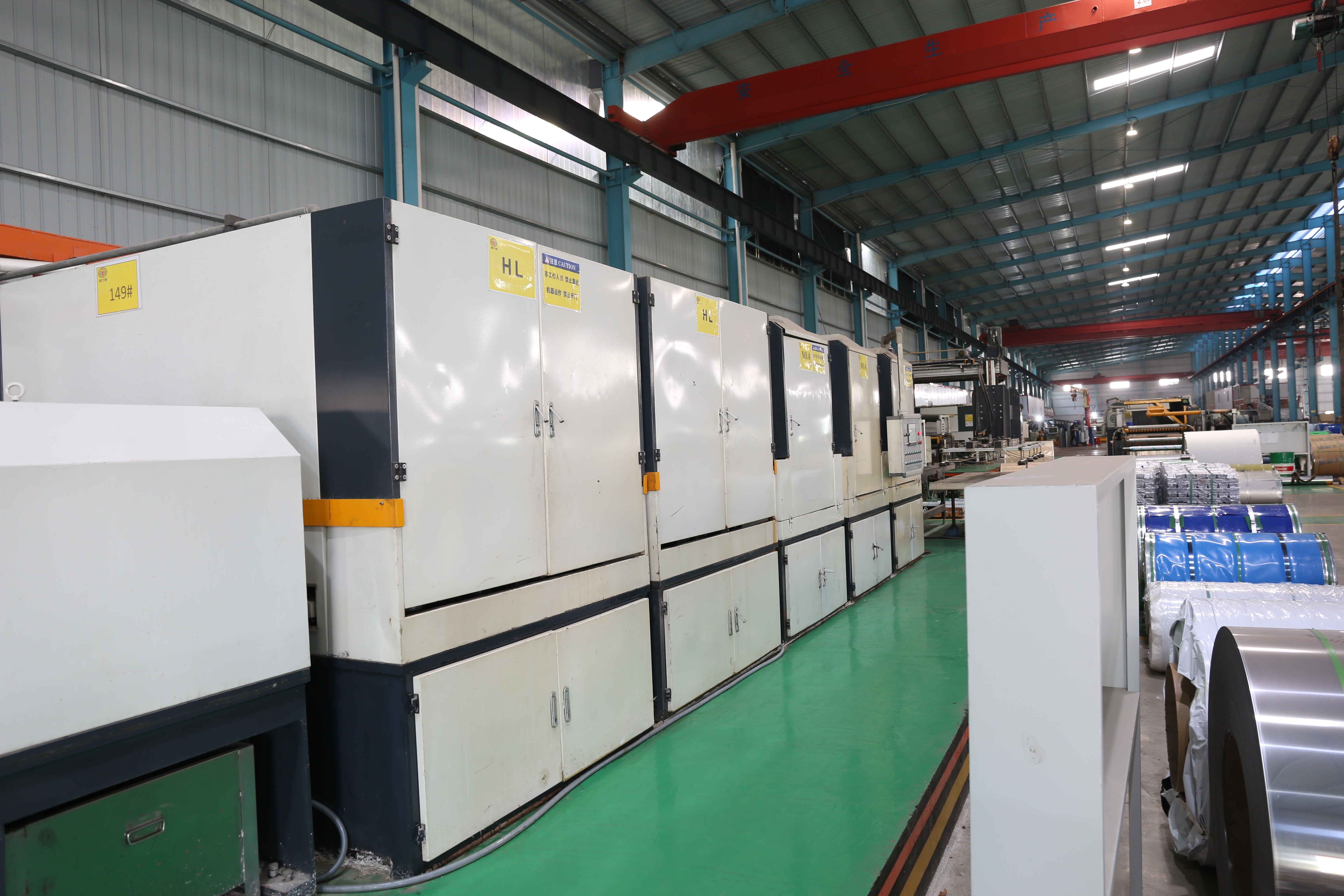
wet-type stainless steel polishing machine for industrial wet grinding
Ⅳ. Practical Selection Guide & Custom Processing Support
Quick Selection Rule for Manufacturers
Choose Wet Grinding: High-value 304/316L stainless steel sheets, food-grade sanitary boards, architectural decorative plates, mass automated production, projects requiring fixed Ra value and mirror finish effect
Choose Dry Grinding: Temporary on-site repair, small non-standard workpiece partial polishing, low-demand ordinary carbon steel rough grinding only
Get Professional Grinding Solution for Your Sheets
It is hard to confirm the final finish effect only by theoretical comparison. If you are planning to buy metal polishing machine and upgrade your existing sheet metal finishing workflow, customized trial grinding is the most reliable way to verify process performance.

